

Women are not okay. Babies are not okay. Fetuses are miscarrying at scale. Female reproduction has been distorted and, in essence, sacrificed.

This is a crisis about which I have been seeking to warn humanity — as those of you who follow my work well know — since 2021, when I was deplatformed from all social media platforms after I had warned that women were reporting menstrual problems subsequent to receiving the mRNA injection. The lawsuit from two attorneys general, Biden v Missouri, revealed that it was this X post of mine warning about menstrual dysregulation that Carolyn Crawford of the CDC had shared with a dozen government agencies, with a memo to them to “BOLO” — “be on the lookout” — for similar content of mine. In spite of that fairly terrifying level of opposition, for three years I executed the unenviable task of trying to alert the world to report after report from our WarRoom/DailyClout Volunteers of reproductive damage from the mRNA vaccine. With commentator Steve Bannon’s support, and equipped with research resulting from the work of 3500 heroic and relentless WarRoom/DailyClout volunteer doctors and scientists who read through The Pfizer Papers and issued 109 reports, and under the leadership of research manager Amy Kelly, we brought the world, week after week, reports of a biological apocalypse.
The reproductive damage to women revealed in The Pfizer Papers ranged from lipid nanoparticles accumulating in ovaries and blocking fallopian tubes; to spike protein and polyethylene glycol from mRNA injections entering nursing mothers’ breast milk, causing babies to convulse or vomit and in one case, to die; to a hideous eight-page memo sent to then-CDC director Dr Rochelle Walensky in April of 2021 practically boasting that two babies had died in utero after “maternal exposure” to the vaccine; to the much-assailed but never-debunked report of ours showing that in one section of the Pfizer Papers, over 80 per cent of the pregnant women followed had lost their babies.
In all of this time, we never received a single lawyer’s letter from Pfizer. Our reporting stands to this day.
We published two books, and countless articles; I appeared on numberless podcasts to trudge through my dire and miserable litany. It felt like endlessly trying to clean out a moral equivalent of the Augean stables; but instead of filth from horses, I felt as if I was calling attention to and seeking proper burial for a mountain of lost babies; surrounded always by the spirits of grieving women. And all around this mountain of innocent death and female tears, there were collusion and silence. Almost no one from the establishment that was supposed to care for women and babies, saw anything. There were two honorable ob/gyns —- Dr James Thorp was one of them — and two honorable midwives, one anonymous. It was hellish work.
As you know, my physical health broke down.
It took me a year to begin to recover emotionally.
And now — women, as I say, are not well. They are miscarrying. Babies are not surviving. There is an absolutely predictable crash in birthrates. The US has now reached its lowest birthrates in its history — 1.6 babies per woman.
“In 2024, the U.S. recorded its lowest ever fertility rate of 1.6 births per woman, following a downward trend in fertility rates starting in the early 2000s, and it is consistent with a global decrease in fertility rates. Data from the United Nations Population Division show that global rates were down to 2.2 births per woman in 2023, compared to 5.3 in 1963.
“Fertility is falling across the globe, but there’s a lot of variation,” Zimmerman said in the January 5 episode of Public Health On Call. Niger, Chad, and other sub-Saharan African countries, for example, still maintain high fertility rates of over 6.0 births per woman, while South Korea’s rate is lower than 1.0.”
As I had warned in 2021-2024, the mRNA vaccines’ were disproportionately aimed at certain countries: especially the West. This is the result: birthrates have collapsed in the US, Western Europe, South Korea, Japan, and, interestingly, China; but the Arab world and Africa shows much more robust reproduction.
This map using data from the World Bank shows that the demographic future is Algerian, Libyan, Egyptian, Yemeni, Kazakh, Mongolian, Afghani, Syrian, Iraqi and Central African, even as the populations of the Western nations collapse with “no visible bloodshed”, attack, massacre or military invasion:

Those countries have more than two babies born per fertile woman — from 2.35 to as many as 4.10 per woman. In many of these countries, vaccination rates were low. Bangladesh? 2.1. Benin? 4.5. Central African Republic? 6.0. Democratic Republic of Congo? 6.0. “Middle East, Afghanistan, North Africa and Pakistan” — one category for some reason — 3.0. “Arab World” — 3.1.
In contrast, the developed world’s — the “Western” world’s, culturally speaking — birthrates shows a bloodbath. Iceland: 1.6. Sweden — 1.4. South Korea — a shocking .8. The UK? 1.6. The EU as a whole? An astonishing 1.3. Central Europe and the Baltics? 1.3. Singapore? An astonishing 1.0. Puerto Rico? 0.9. New Zealand? 1.6. Poland? 1.1. Germany? 1.4. Finland? 1.3.
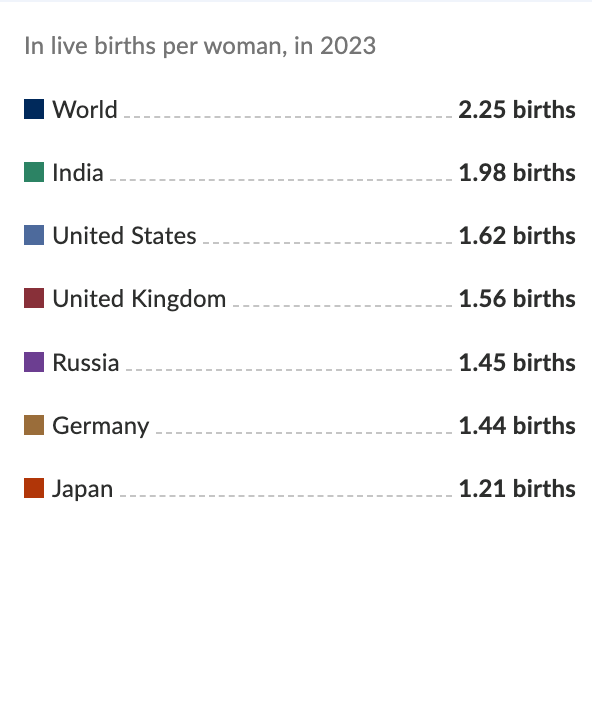
Take a comprehensive look:

In contrast, just look at one fundamentalist Muslim country — Afghanistan:

Did Afghanistan have a high rate of COVID vaccination? No. “Afghanistan did not have a high rate of COVID-19 vaccination compared to global averages. While millions of doses were administered, approximately 40% to 44% of the population was fully vaccinated. The rollout was significantly hindered by vaccine hesitancy, supply shortages, and logistical challenges.”
Did sub-Saharan Africa have high rates of COVID vaccination? No. The very countries from whom millions of people are being shipped into Europe, were spared the frantic mRNA rollout: “COVID-19 vaccination efforts are lagging in Sub-Saharan Africa, as just over 20 percent of the population has been fully vaccinated.”
Hm.
Now think about the countries from which immigrants are being shipped wholesale to Europe, Australia, Japan, the US (under President Biden) and Canada, by globalist interests.
They are the same nations whose fertility was spared in what was otherwise a global frenzy to vaccinate: sub-Saharan Africa, fundamentalist Muslim countries in the Middle East, Afghanistan, Syria and so on.
Do you see the pattern?
I warned that different vials of the mRNA injection had different levels of damaging ingredients; indeed, different brands had different levels of damaging ingredients, with Moderna containing three times the damaging material as did Pfizer. I warned that issues as manipulable as temperatures of storage, or instructions for how many doses per vial, could affect the lethality or destructiveness of this injection — and I warned that the Pfizer documents showed dramatically higher rates of deaths and serious adverse events in the US than in any other country; and that after that, the highest rates were in Europe, in order of political importance — Germany, UK, France; Italy, Greece, Spain. And after that, all the rest of the world showed only 7% of the serious adverse events.
It was a geographically curated culling and sterilizing campaign.

This, today, is the result of this globally carefully targeted culling and sterilizing spree. Some nations are reproducing with extraordinary success; and the indigenous people of others are steadily dying out. And the abundant and fertile people from sub-Saharan Africa and certain fundamentalist Muslim nations are being exported to the European nations, to Canada, to Japan and Australia and Iceland — where the indigenous peoples at these rates can never replace themselves.
Now going from the macro to the micro: women in the US are suffering, babies are dying. Just in my immediate circle, I know young vaccinated women incapacitated and bedridden for days by horrific menstrual cramps; I have two young vaccinated colleagues who were told by their gynecologists that the lining of their uteruses are abnormally thin (a side effect of the vaccines, as documented in the Pfizer papers). I know a young woman who suffered a stroke — “reassuringly” called a “mini-stroke” — when she was pregnant. I know a young vaccinated woman who had two miscarriages in five months. I know a vaccinated mother of four in her thirties who has now has had almost twice the number of miscarriages than she has had children.
You may not be aware of this kind of bloodbath, for reasons about which I warned in 2021-2024: women don’t tend to speak publicly about their agonizing cramps, or about passing tissue or hemorrhaging from their uteruses; or about needing news technologies to deal with excess bleeding; or about miscarriage after miscarriage after miscarriage.
They weep in private. They mourn in private. Prevented from seeing the larger picture, they often think there is something wrong with them personally, or they blame themselves, or they believe that they are cursed by Nature.
Believe it or not, the market has adjusted to this bloody and deadly new reality; there are new brands of underwear — “Thinx” and “Knix” and many imitators - that absorb excess menstrual blood (which sounds disgusting and unhygienic, but this requirement seems to be the “new normal” for many childbearing age women).

Now — surely the medical establishment and the scientific institutions are all over this painful new reality, educating women and seeking out remedies, treatments and news solid studies.
JK; of course they are not.
But there is hope. There is a remedy.
I’ve been acting as a kind of amateur-herbalist secret network facilitator. I searched out the ingredients of the original Lydia Pinkham’s remedy — some were very difficult to find - and I have been compiling the herbs, in my kitchen, into a dry tea, to steep into a concoction; and I have been handing out paper bags of the precious ingredients to individual suffering women of childbearing age, who are willing to try it.

FDA, please do not arrest me.
Many of them tell me that they are feeling better.
But I am not a doctor or a scientist, so we need to pursue this avenue of hope, more formally and systematically and conscientiously.
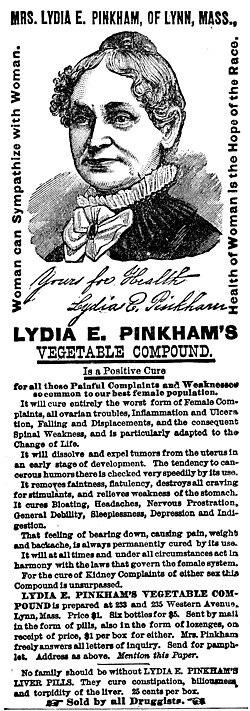
Since 1873 to about 1906, women have been taking a compound called Lydia Pinkham’s compound. Lydia Pinkham, a Lynn Massachusetts housewife, learned about the ingredients from the lore of native American women healers. She bottled the earliest product in her kitchen, and eventually became one of the most successful entrepreneurs of the late 19th and early 20th centuries. Thousands of women wrote to her, thanking her for easing their menstrual symptoms, “toning” their uteruses, helping them to conceive and deliver healthy babies without difficulty or injury, and eventually managing successfully the natural transition of menopause, without effort or pain.
But of course, Big Pharma eventually bought up Lydia Pinkham’s company and altered the formula. And paradoxically, Radcliffe, part of Harvard University, keeps the extensive archive of the company’s records — but is preventing anyone from gaining access to extensive studies from the mid-20th century, that likely prove the efficacy of the herbs in her compound, and explain the scientific mechanism that led to the compound’s success.
I have drafted a proposal for HHS, to reconvene a group of volunteers and liaise with a university, to retrieve these records and recreate the original formula. I want to partner with a research group and lab to recreate the studies and report on the efficacy and mechanism of this remedy.
What would we be disrupting, if we can prove that a cheap, easily available, natural remedy with few or no side effects in proper dosages, can ease the reproductive damage, heal the damaged uteruses, sustain the pregnancies, and address or even end the menstrual, pregnancy-related, perimenopausal and menopausal misery of modern women - and especially of mRNA vaccinated women?
“The global menstrual drug and care pharmaceutical market is valued at billions of dollars, with the broader feminine hygiene and period care market estimated at roughly $37.1 billion, expanding toward $69.1 billion in the coming decade.”
Well, look at that. If nothing changed in women’s menstrual health, what is causing this deliriously lucrative (for pharma) growth in revenue?
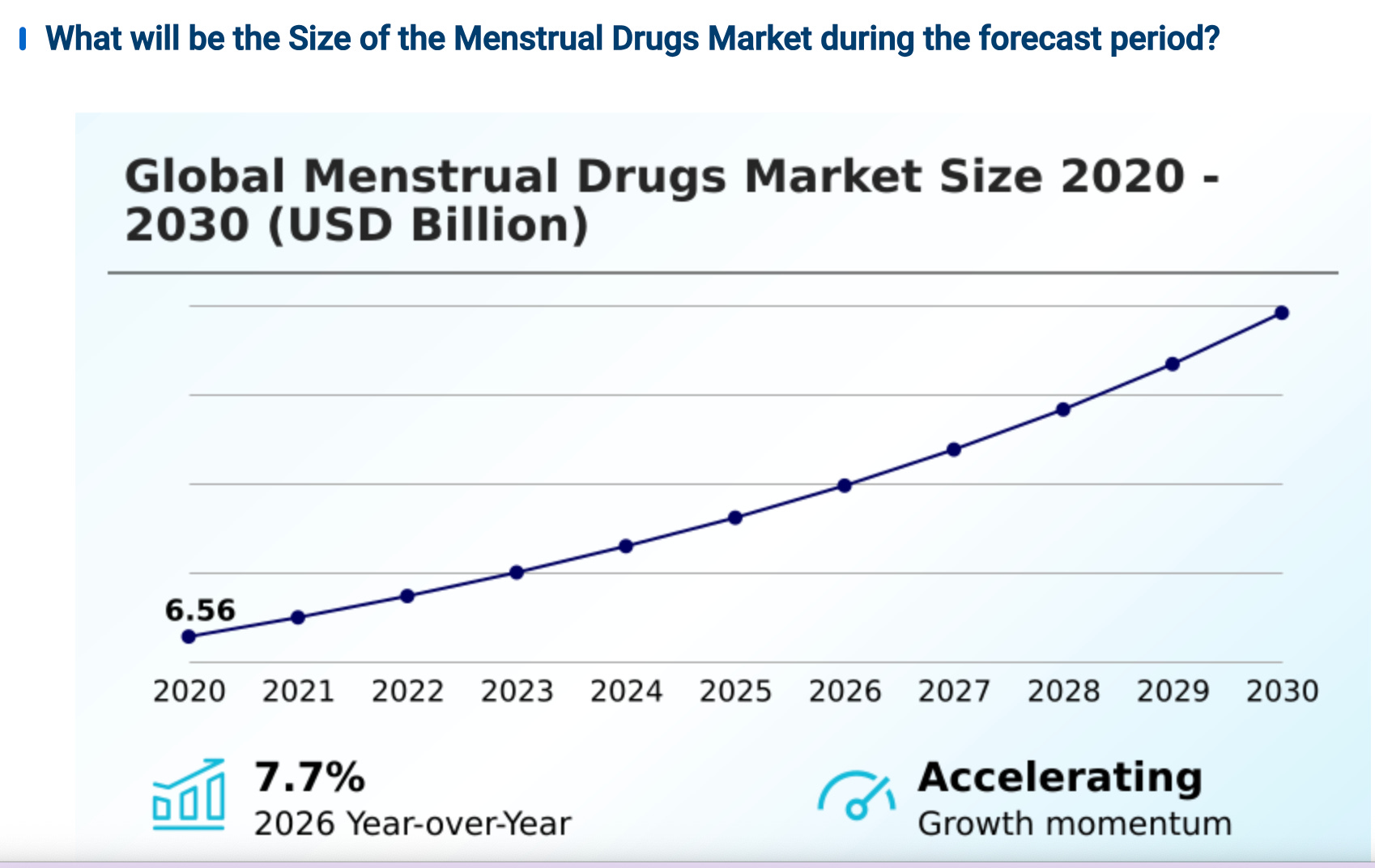
“The global menstrual drug and care pharmaceutical market is valued at billions of dollars, with the broader feminine hygiene and period care market estimated at roughly $37.1 billion, expanding toward $69.1 billion in the coming decade”
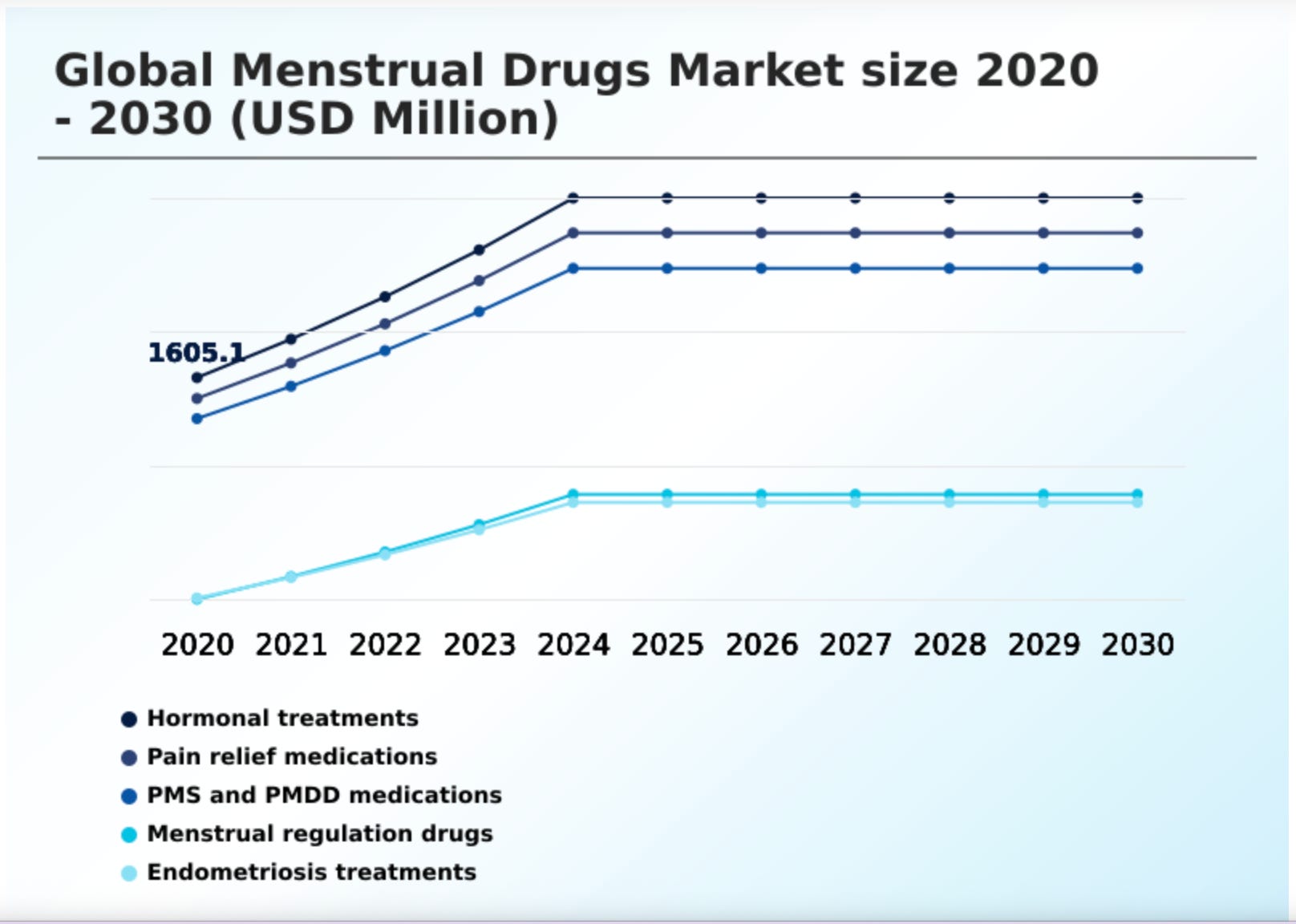
And take a look at this. What happened from 2021-2024? Yep. And what stopped happening, for the most part, in 2024, causing the projected plateau? Yep. But the damage was done.
Menopause care is also a booming sector, especially in the VC space. if women have not changed, how should the “Fierce Pharma” platform be so bullish about treating symptoms of this transition — symptoms that, by the way, are never mentioned in women’s literature or letters or diaries before the late 20th century?


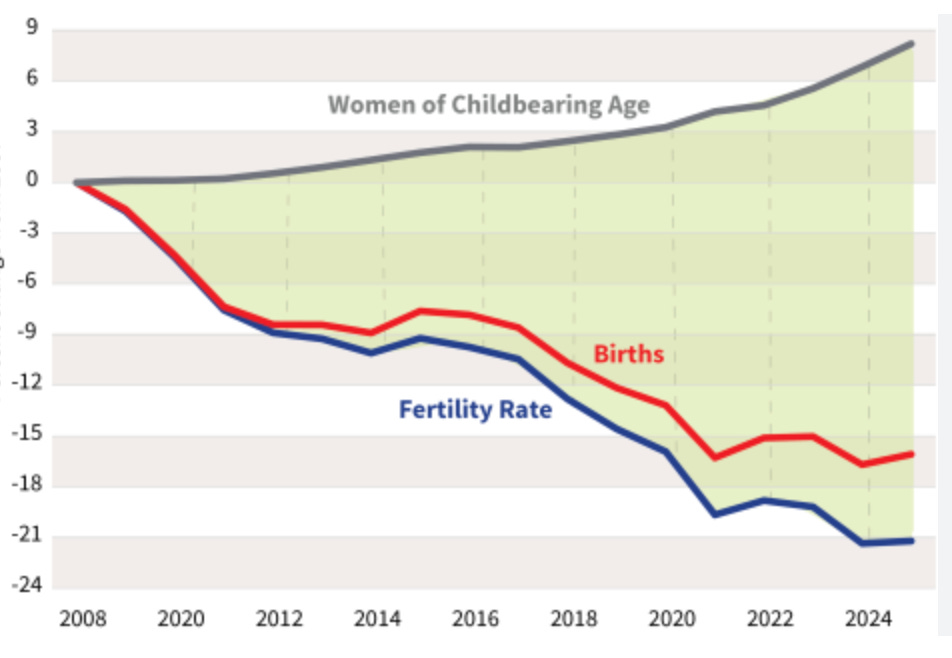
Here is the US rate of live births, above.
Could these cynical, cruel charts and industry headlines explain some of the frenzy to use on every woman possible - at least in the developed world — an injection that the manufacturers knew would ruin women’s menstrual cycles and fertility and reproductive health? Remember, Pfizer had charts showing the CDC and the FDA the menstrual ruination — via exactly such symptoms and diseases as those listed above in the menstrual injuries market chart — in tens of thousands of women.
Can an ancient formula, handed from Native American women to a 19th century housewife/entrepreneur, and now buried — intentionally? — in the archives of Harvard University, provide a remedy to save the future?

The simple answer may be — Yes. It has before. For almost seventy years.
Please read the proposal below. We have to force open Radcliffe’s archives and un-redact the extensive scientific studies of Lydia Pinkham’s formula. We have to resurrect the original formula, and test it on volunteers against a control group, in proper clinical circumstances.
Please support this initiative, if you agree that it may be valuable, by emailing or calling HHS.
This project is going to require resources. The Pfizer Papers effort and publications ultimately cost a substantial amount of funds, in spite of volunteers working without pay and staff working far below market rates.
Please contribute what you can to our starting this effort and reporting to you the results. You can make a one-time donation here. Or subscribe here:
Please help save babies, if indeed this formula is as effective as thousands of women reported it to be from 1873-1940s; and please help ease the suffering of women of all ages.

Herbal Fertility Supplement Study Proposal/ HHS.Gov
Is a Powerful Fertility Remedy Buried in Medical History?
Lydia Pinkham’s Formula
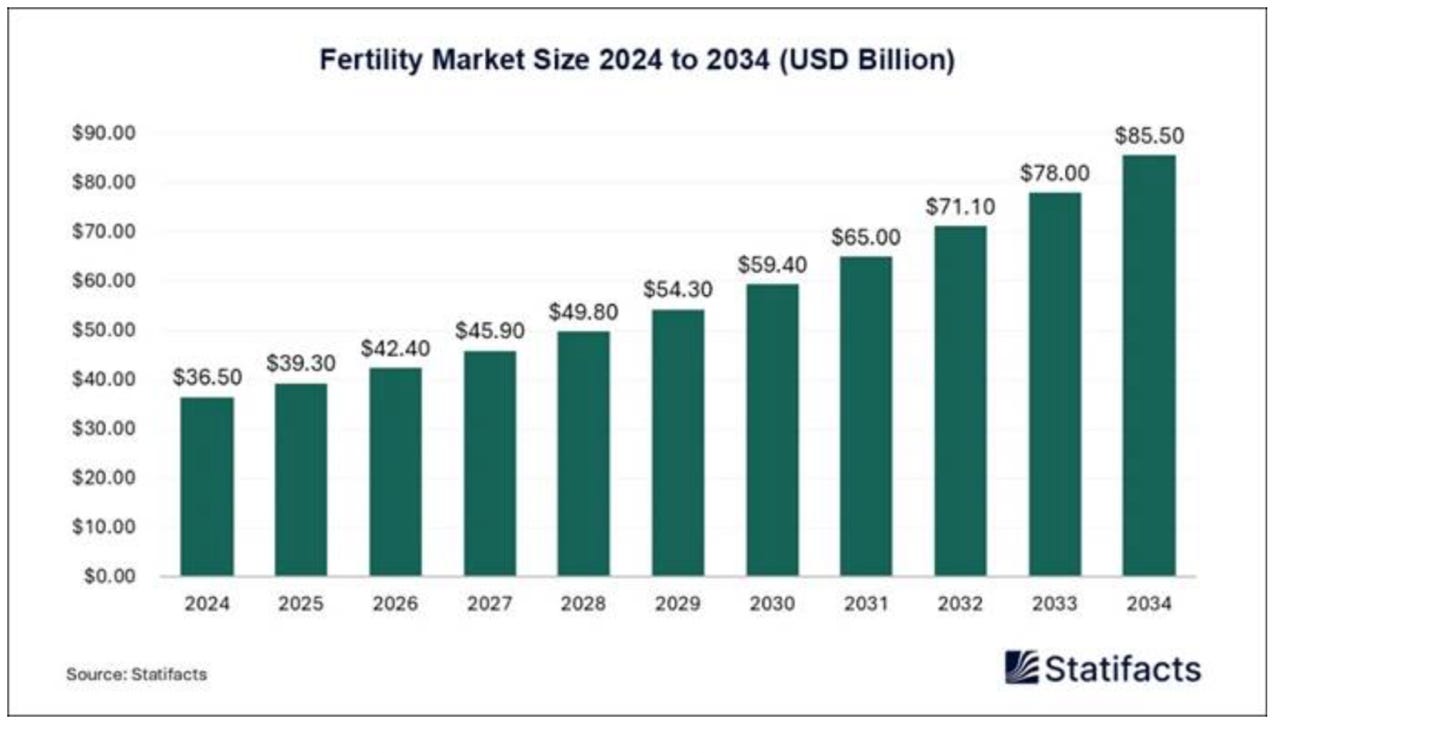
We are currently facing a fertility crisis in the United States and indeed, throughout thew West. According to mathematician Igor Chudov, government databases show a 13-20 per cent drop in live births in recent years. Canadian Provincial records also show a drop in live births. Infertility treatments as an industry amount to a $36.50 dollar industry in the United States in 2024, and the analytics site Statifacts expects that industry to reach an $85.50 billion dollar market by 2034.
That site attributes the growth in infertility treatments to “fertility issues”, late pregnancies, and other factors. But it is likely that recent experimental interventions have also contributed the dramatic rise in infertility.
I cofounded and co-edited the Pfizer Documents Research Team, an initiative that coordinated 3500 doctors and scientists to review the 450,000 documents in the custody of the FDA, released under court order, subsequent to a successful lawsuit by attorney Aaron Siri. That project resulted in the publication of 109 papers, two of which were also published in peer-reviewed journals. I was the editor of The Pfizer Papers: Pfizer’s Crimes against Humanity, a two-volume set that became a bestseller, that brought these important reports to the general public.
What these reports revealed is that, in addition to other factors contributing to infertility crisis in America – which range from estrogens in the water supply to lowered testosterone levels among men – testosterone deficiency affects 10-40% of American men as of 2020 , to the fact that women and men are choosing to start their families later – the mass mRNA injection campaign of 2021-2024 has also negatively affected fertility; specifically, this rollout has had a catastrophic effect on women’s menstrual health and subsequent ability to carry and bear healthy children.
We found that the Pfizer papers contained evidence that miscarriage rates were higher in women who had been vaccinated. We found that 50 pregnancies appear to have been deleted from the Pfizer trials.The V-Safe system showed a dramatic spike in miscarriage following the initial rollout of the mrna injection:
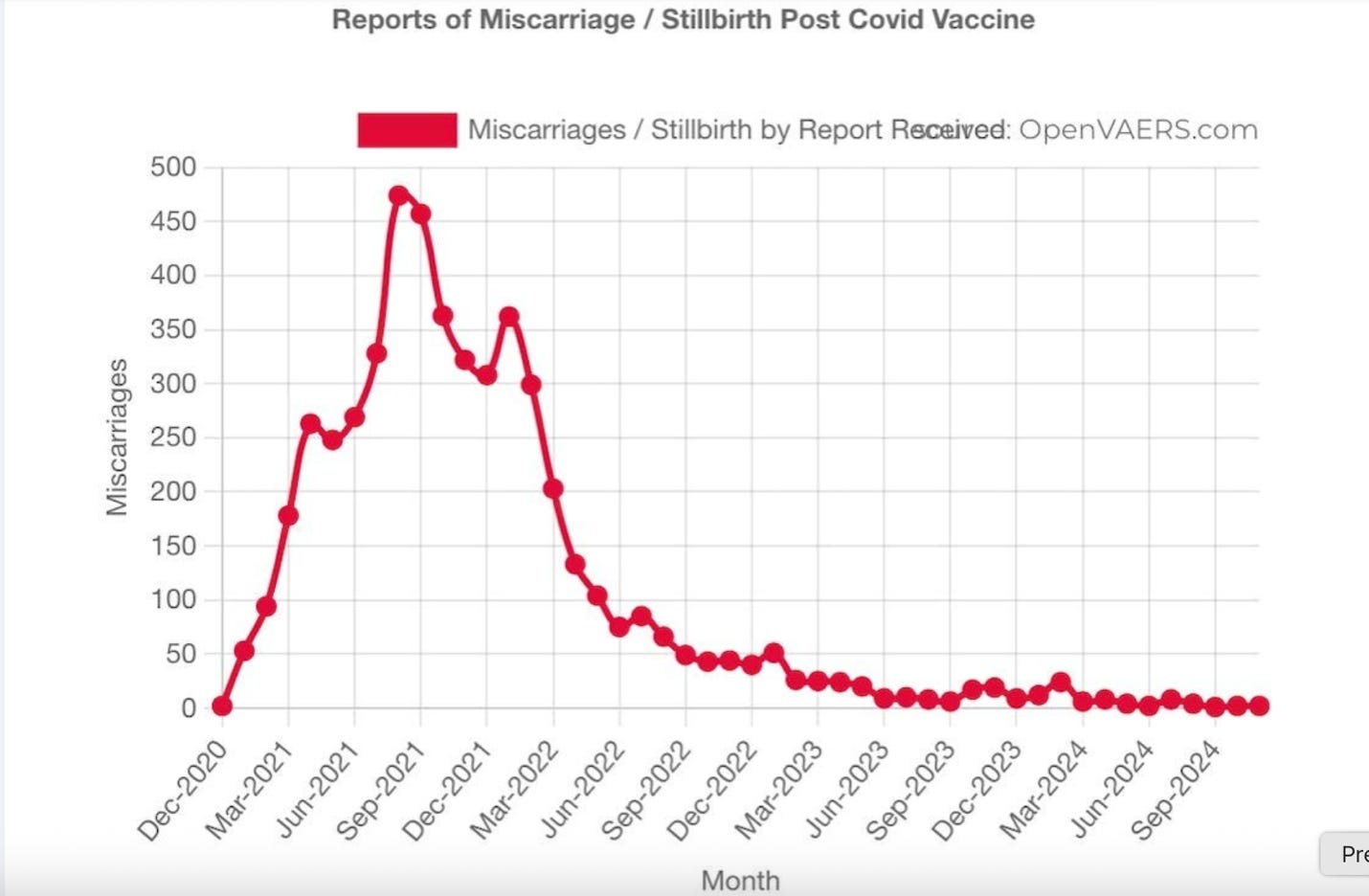
The mRNA injection was known to Pfizer’s researchers internally, to cause menstrual disruptions – a chart to this effect was included in Pfizer;’s internal “Pregnancy and Lactation Report” – and it was also known by researchers to precipitate miscarriages. In addition, gynecologists such as Dr James Thorp have found that the mRNA injection is causing damage to placentas, notably calcifications of placental tissue. Independent midwives are reporting that placentas of vaccinated mothers are unnaturally thin and ill-provided with blood vessels, a condition that causes premature delivery and risks of maternal hemorrhage or even mortality during delivery.
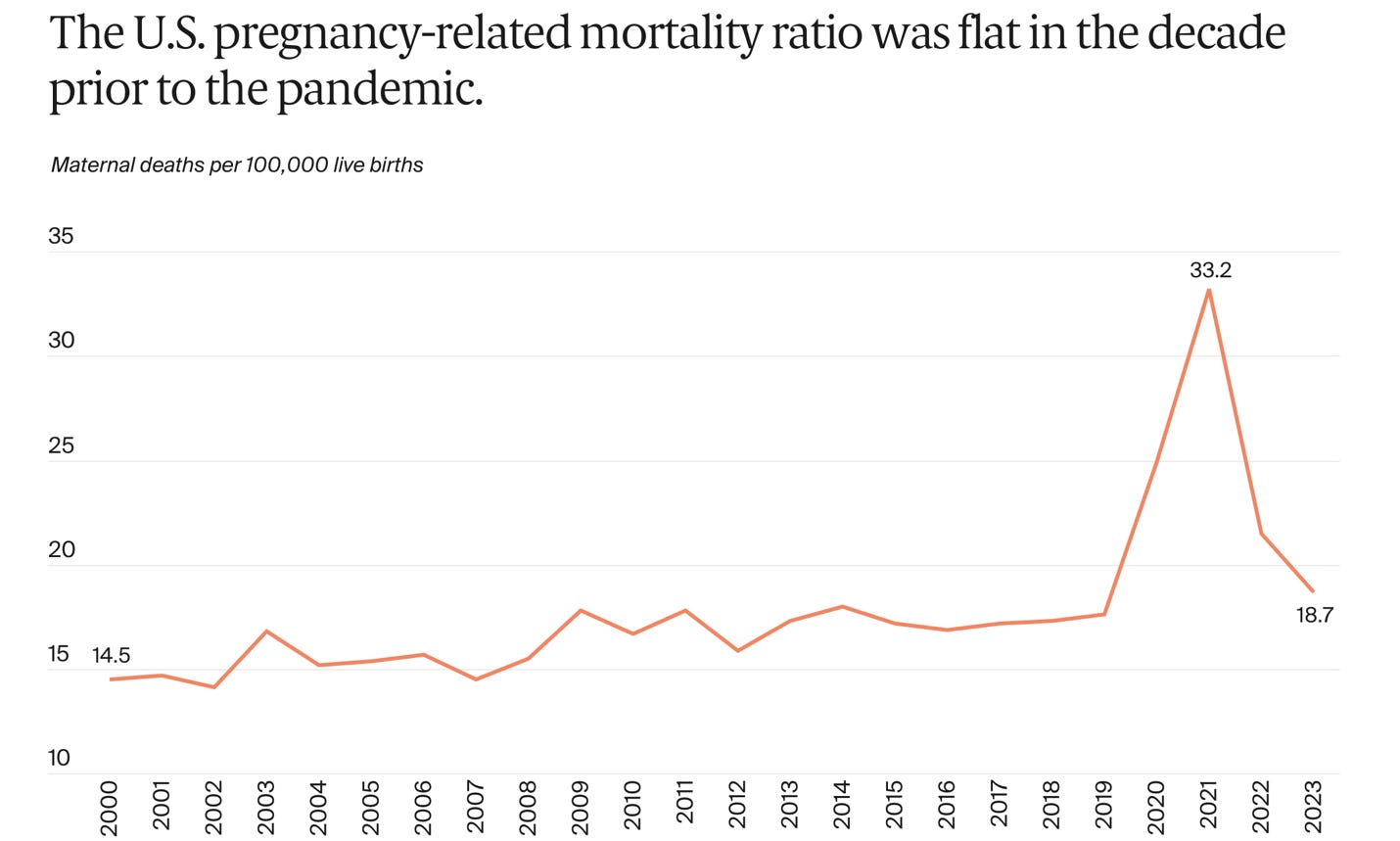
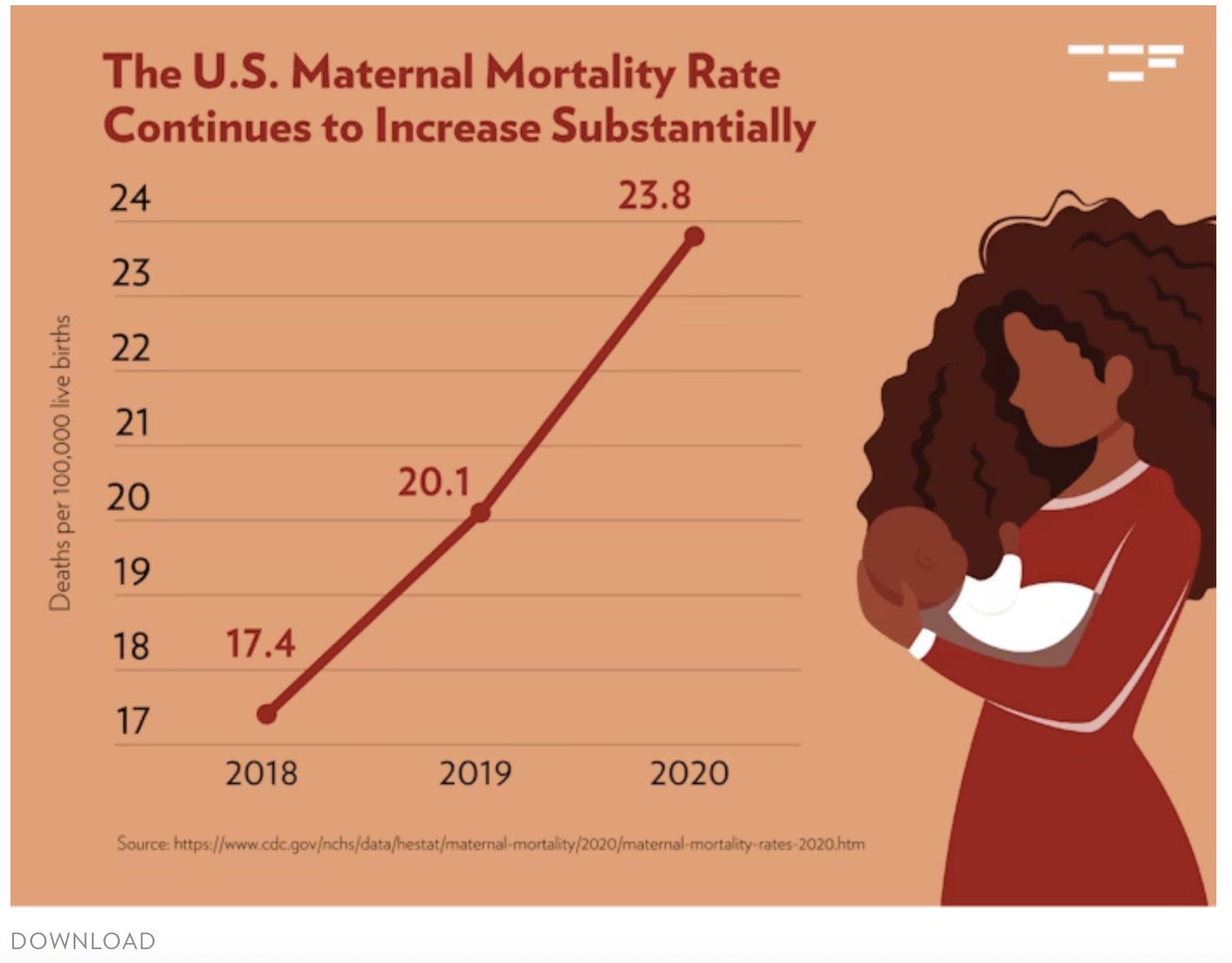
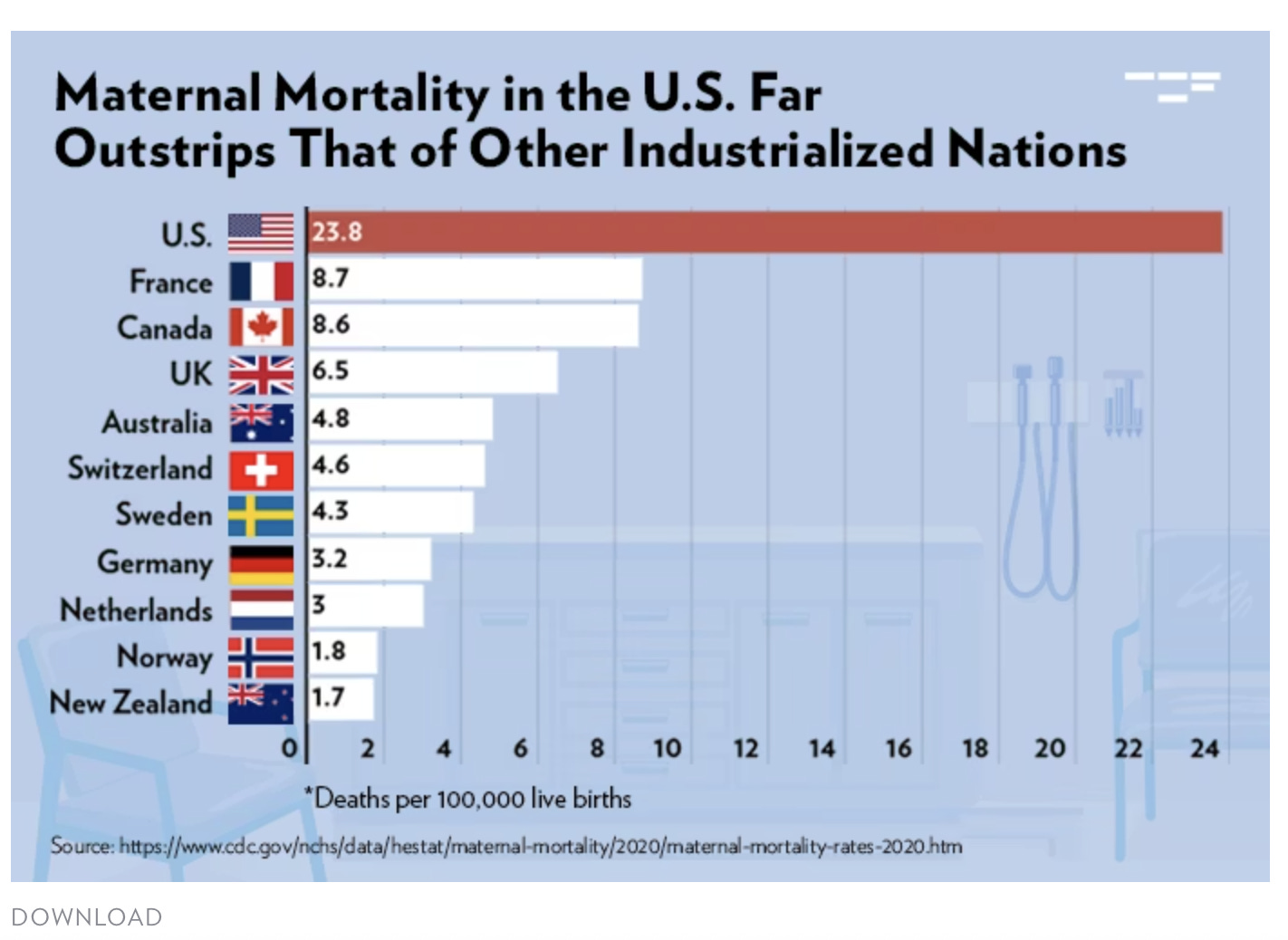
In addition to a spike in maternal mortality following the rollout of the mRNA injection, we also found that multiple studies confirm that the injections precipitated vaginal bleeding. Indeed, we found that the mRNA injection cause vaginal bleeding even in postmenopausal or prepubescent females who were not otherwise menstruating.
Disruptions in women’s menstrual cycles have been confirmed independently by multiple peer-reviewed studies. Though this study in our view misattributes the disruption to “stress” and other factors, this peer-reviewed study in Health Science Reports found widespread disruptions in menstrual cycles, subsequent to mrna injection:
“The results of this systematic review showed that COVID‐19 vaccination is associated with a wide range of menstrual disorders in women of reproductive age and postmenopausal women. The most commonly reported disorders were menorrhagia, delayed menstruation, changes in menstrual cycle length, spotting between periods, and increased bleeding volume. In postmenopausal women, complications such as spotting and resumption of bleeding were also observed. Although the prevalence and incidence of each disorder varied across studies, these findings suggest that vaccination can lead to changes in the menstrual cycle.”
The “Apple Women’s Health Study” from Harvard’s TH Chan School of Public Health also found disruptions in women’s menstrual cycles post-vaccination. A study in Medicina, “Menstrual Changes Following COVID-19 Vaccinartion: a Cross-sectional Study”, found the same outcomes:
“ Menstrual changes, including altered cycle length and bleeding patterns, have been reported following COVID-19 vaccination. This study aimed to determine the prevalence and types of menstrual changes occurring after COVID-19 vaccination among female students and staff at a university in Saudi Arabia. Materials and Methods: A cross-sectional study was conducted among women aged 18–39 years who received at least one dose of a COVID-19 vaccine. Eligible participants, including university students and staff, were recruited between May 2022 and November 2022. Participants completed a questionnaire detailing their sociodemographic characteristics, general medical and reproductive history, and menstrual characteristics before and after vaccination. The prevalence of various menstrual changes (cycle length, bleeding days, flow, and mid-cycle spotting) was calculated. The demographic factors associated with menstrual changes were analyzed using chi-squared tests. Results: The 472 included participants had a mean age of 20.9 years, and 95.3% were unmarried. Changes in menstrual cycle characteristics after COVID-19 vaccination were reported by 54.7% of respondents overall. The most common change was in cycle length, followed by the number of menstruation days and bleeding flow.”
So by now, some of the causes of the fertility crisis, are merging if not confirmed. The lipid nanoparticles in the mRNA injections biodistributed throughout the body and accumulate in the fallopian tubes. This is the case for other medications as well that use nanoparticles in formulation.
The injection also causes disruptions in menses, which of course includes disruptions in fertility.
The injections can cause thinning of the uterine lining or even shedding of the uterine lining. They can also cause calcifications that weaken the placenta, contributing to maternal mortality and to premature delivery of babies.
All this damage to female fertility, is just half of the equation, of course. The mrna injections also negatively affect sperm motility. This study was published in the Asian Pacific Journal of Reproduction. So adding the mrna vaccine rollout to other factors making it difficult for couples to conceive and for women to bear children safely, we have a perfect storm of American and Western infertility.
Currently, treating infertility involves prohibitively expensive courses of hormone therapy, IUI and IVF. Medications include Clomiphene/Tamoxifen, which encourages egg release.
Metformin: Used for PCOS-related infertility.
Gonadotrophins: Stimulate ovaries.
Hormone Injections: Often used for daily stimulation in IVF.
Side effects can be severe: these can include “nausea, vomiting, headaches, and hot flashes from medication.
Ovarian Hyperstimulation Syndrome (OHSS): A risk of over-stimulated ovaries.
Multiple Pregnancies: Higher risk with some treatments.
Emotional Stress: Significant stress is common, making mental health support important.”
In many cases, insurance does not cover treatments, which can cost up to $18000 each.
What if there was an herbal formula that was effective for menstrual regulation, regulation of menopause, and for healthy pregnancies and deliveries, which used natural, affordable substances that have been taken by women for centuries, and that involve few if any side effects?
Remarkably, we have that formula and we have evidence already of its efficacy.
In the 1870s, a homemaker in Lynn, Massachusetts, Lydia Pinkham, assembled a decoction based on herbal remedies that she had reportedly gleaned from native American women’s healing traditions. She prepared these decoctions at first in her kitchen. Her sons and her husband assisted her in marketing the formula and placing it as a “tonic”, available over the counter in pharmacies in the New England. The formula, called “Lydia Pinkham’s Medicinal Compound” or “Vegetable Compound” (to distinguish it from mineral concoctions more often prescribed at that time by physicians), was a tincture, with herbs macerated in alcohol, that women took for illnesses ranging from anemia to “hysteria”, painful or delayed menses, menstrual cramping, to prepare or “tone” the uterus in advance of its achieving a healthy conception and delivery, and to ease the symptoms of menopause.
From the start, this compound proved to be extraordinarily effective. For the next three decades, women of all ages and backgrounds wrote to what was now a factory and office building housing “Lydia Pinkham’s” company. Their letters, which they were assured would be read by women only – a novel and important arrangement in the history of women’s medical treatment – described illnesses, symptoms and pathologies of many kinds; they sought advice and recommendations from Mrs Pinkham and, later, her all-female staff; and they often reported marked improvements in their menstrual or menopausal wellbeing. They reported on healthy pregnancies and successful deliveries, as well: a later advertising slogan claimed that there was “a baby in every bottle.”
The fact that so many thousands of women found relief from menstrual problems, and achieved successful pregnancies and deliveries, is not surprising. The chief initial five ingredients of Mrs Pinkham’s formula have been in in treating women and reproductive issues for centuries, among herbalists from many different alternative healing traditions.
“The five herbs contained in Pinkham’s original formula are:
Pleurisy root is diaphoretic, anti-spasmodic, carminative, and anti-inflammatory.
Life root is a traditional uterine tonic, diuretic, anti-inflammatory, and emmenagogue used for amenorrhea or dysmenorrhea.
Fenugreek is vulnerary, anti-inflammatory, anti-spasmodic, tonic, emmenagogue, galactogogue, and hypotensive.[15]
Unicorn Root was used by several Native American tribes for dysmenorrhea, uterine prolapse, pelvic congestion, and to improve ovarian function.[16]
Black cohosh is an emmenagogue, anti-spasmodic, restorative, nervine, and hypotensive and is used traditionally for menopausal symptoms.[15]
Of the newer additions, motherwort is a nervine, emmenagogue, anti-spasmodic, hepatic, cardiac tonic, and hypotensive. Piscidia erythrina (Jamaican dogwood) is an eclectic remedy effective for painful spasms, pelvic pain, dysmenorrhea, and ovarian pain.[16] Licorice is anti-inflammatory, anti-hepatotoxic, anti-spasmodic, and a mild laxative. Gentian is a sialagogue, hepatic, cholagogue, anthelmintic, and emmenagogue. Dandelion is a potassium-sparing diuretic, hepatic, cholagogue, anti-rheumatic, laxative, tonic, and a bitter.[15]””
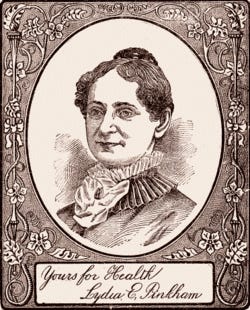
Pinkham, from a 1904 pamphlet
Born
Lydia Estes
February 9, 1819
Lynn, Massachusetts, U.S.
Died
May 17, 1883 (aged 64)
1882 ad for Lydia Pinkham’s Vegetable
The five herbs contained in Pinkham’s original formula are:
Pleurisy root is diaphoretic, anti-spasmodic, carminative, and anti-inflammatory.
Life root is a traditional uterine tonic, diuretic, anti-inflammatory, and emmenagogue used for amenorrhea or dysmenorrhea.
Fenugreek is vulnerary, anti-inflammatory, anti-spasmodic, tonic, emmenagogue, galactogogue, and hypotensive.[15]
Unicorn Root was used by several Native American tribes for dysmenorrhea, uterine prolapse, pelvic congestion, and to improve ovarian function.[16]
Black cohosh is an emmenagogue, anti-spasmodic, restorative, nervine, and hypotensive and is used traditionally for menopausal symptoms.[15]
[[ Hoffman, David. “Herbal Medicine Materia Medica”. healthy.net. Archived from the original on March 2, 2009. Retrieved 7 January 2021.]
Mrs Pinkham’s company and formula were targeted by the government agencies that were the precursors of the Food and Drug administration, and by the 1910s, with the rise of professional medical societies and rationalized medical training, the company was asked by government regulators to demonstrate efficacy in a more scientific context than it had had to previously. As a result, the formula was altered. An addition was motherwort, an emmenagogue. Piscidia erythrina (Jamaican dogwood) was added, which has been used by herbalists for pelvic pain, dysmenorrhea, and ovarian pain. Licorice is anti-inflammatory.. Gentian is an emmenagogue. Dandelion is a diuretic an a bitter.
The formula continued to be popular after Mrs Pinkham’s death in 1883; indeed, for decades afterward. In the 1950s, the company did indeed produce randomized controlled double-blind studies of the formula. These are the focus of my proposed research. The results, along with thousands of letters from women describing their reproductive struggles and the improvements brought about by this herbal remedy, are all contained at the Archive at the Harvard Radcliffe Institute Archive, in Cambridge, Massachusetts. However, while many less significant documents related to Mrs Pinkham and her compound are available to researchers – from receipts for office supplies purchased by her company, to textbooks she created for women customers – the 1950s double-blind study and its results, are embargoed and cannot be reviewed even by researchers at the Institute; not even by Fellows in the Fellows’ Program. The reason that the Harvard Radcliffe Institute archive gives, is “privacy” of the subjects. I would argue that medical records and scientific records are easily de-identified with today’s digital technologies, and that this extremely important record of a scientific inquiry into the efficacy of a set of traditional herbal remedies in healing reproductive issues in women, has public interest value and that the study should be made available to researchers and even to the general public. It is an intriguing question – if the possible efficacy of these traditional herbs, used for millennia for easing menstrual symptoms, toning the uterus for healthy deliveries, and supporting healthful menopause, might be embargoed because the information concealed, perhaps poses a threat to highly lucrative pharmaceutical interests treating the same conditions via pharmaceutically-based and patentable interventions.
Unsurprisingly, a study was launched in 2005, which found that herbal remedies had no effect on women’s menopausal wellbeing:
“In 2005–6 the National Institutes of Health performed a “12-month randomized, double-blind, placebo-controlled trial, [which] compared several herbal regimens and menopausal hormone therapy (estrogen with or without progesterone) to placebo in women ages 45 to 55 [...] Newton and colleagues found no significant difference between the number of daily hot flashes and/or night sweats in any of the herbal supplement groups when compared to the placebo group.” I wish to see if the concealed 1950s study confirms or challenges the results of this 2005-6 study.
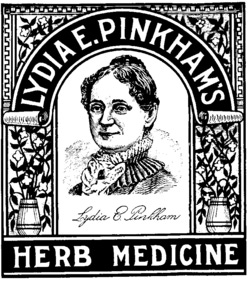

Numark Laboratories of Edison, New Jersey sells “Lydia Pinkham Herbal Compound”. The herbs added to the original formula are as follows:
Motherwort (Leonurus cardiaca)
Gentian (Gentiana lutea)
Jamaican dogwood (Piscidia piscipula)
Pleurisy root (Asclepias tuberosa)
Licorice (Glycyrrhiza glabra)
Black cohosh (Cimicifuga racemosa)
Dandelion (Taraxacum officinale)
Time of Your Life Nutraceuticals of St. Petersburg, Florida, produces a product “based on” Mrs Pinkham’s formula. It contains:
Black cohosh root (Cimicifuga racemosa)
Dandelion root (Taraxacum officinale)
Pleurisy root (Asclepias tuberosa)
Chastetree berry (Vitex agnus-castus)
False unicorn root (Chamaelirium luteum)
Jamaica dogwood bark (Piscidia piscipula)
Gentian root (Gentiana lutea)
Many of these ingredients have been used in different herbalist traditions – ranging from Ayurvedic to Central American and Caribbean, to Colonial British and Native American – to regularize and ease women’s menstrual symptoms, to “tone” the uterus preparatory to conceiving and carrying a child - – a concept that really no longer exists in gynecology or women’s health discourse – and to ease childbirth and menopause. As part of the historical and ethnobotanical analysis informing compound selection, the team will conduct qualitative consultations with knowledgeable practitioners, including, where appropriate and with community consent, Indigenous healers with expertise in traditional reproductive health practices. All such engagements will be conducted in accordance with appropriate ethical guidelines, community permissions, and respect for cultural knowledge and sovereignty.
I wish to compile the antecedents of Mrs Pinkham’s formula, by researching and identifying related herbal supports for women’s fertility, in prior traditions. I wish to visit the 1673 Chelsea Physic Garden in London, UK, where the herbalist tradition that came to America with the colonists, originated. I will look at herbs and remedies identified there, and in related herbalists’ texts, that have to do with fertility. I wish to return to Oxford University, and review 19th century women’s housekeeping texts in the Bodleian Library’s Medical Sciences Division, to identify herbal and traditional fertility remedies in herbalist textbooks and housekeeping compilations form the 18th and 19th centuries, aimed at women. By doing so, I will establish the background practice of alternative support for fertility, upon which Mrs Pinkham drew in creating her successful Formula.
Then, of course, we wish to test the formula, along with some of the variants. We propose to coordinate with some of our key researchers from the Pfizer Papers project, several of whom have the backgrounds in both scientific study design and in biology that would allow them effectively to assess the impact of the herbs in Mrs Pinkham’s compound. We would contract a lab and/or a university research facility. and run a series of studies using volunteers – couples who wish to conceive, as well as individual women whose menses are painful or irregular, or who are suffering from miscarriages. By designing a series of studies that test the ingredients in the compound, and add lifestyle changes such as those that Mrs Pinkham recommended – from sunlight to better nutrition to gentle exercise -- we can potentially identify an affordable, healthful fertility support that is an alternative to dangerous, expensive fertility treatments, and that can ease the misery and uncertainty for millions of women, of their currently ruined or damaged menstrual cycles.
By requiring Harvard and Radcliffe to release the 1950s study of the herbs in Mrs Pinkham’s compound, we can add to the literature of wellbeing and optimal fertility for women, and give them a real support for menstruating easily and regularly, and then conceiving easily and carrying healthy babies to term effectively.
In designing such a study and pursuing this set of research aims, we provide a lasting gift of wellbeing and healthy fertility for women and for couples, that will long outlast the period of inquiry.

Thank you for your tireless work on behalf of women and babies. I felt such gratitude for you when I read this article. It's heartbreaking to watch what's going on. I know women who have managed to have a baby and then their babies are so unhealthy that they deal with constant doctor's visits with no real diagnosis. All of it makes me so angry.
That is a great idea and I would love to see this initiative become a great success.
There are a couple other avenues here that are well worth exploring.
During the mid 20th century, Dr. Klenner used high doses of Vitamin C to successfully treat many infectious diseases and other serious conditions. Less well known is that he developed a protocol for using high doses of Vitamin C for pregnancy and it was very successful in producing healthy pregnancies and robust babies.
Another, more recent and important discovery is that the reproductive microbiome (of men and women) is a very important variable in the ability to conceive and carry a baby to birth. Here is a good article on this topic:
https://www.westonaprice.org/health-topics/microbiome-and-fertility/#gsc.tab=0